


Which is best for your grocery store?
Feeling torn between Toast and IT Retail? We can help!
Discover the differences in their pricing, features, and support — and decide which solution is the best fit for your grocery store.
Feeling torn between Toast and IT Retail? We can help!
Discover the differences in their pricing, features, and support — and decide which solution is the best fit for your grocery store.
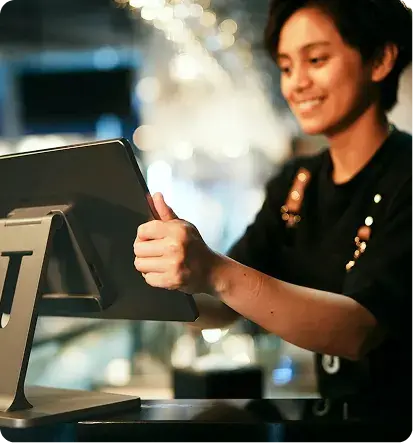
Get the full scoop on how IT Retail's pricing, features, and support stack up against Toast's offerings.
This feature is fully suitable and supported for grocery stores.
This feature is limited. It may not work well for grocery stores, it might require extra investment,
or the provider doesn’t fully support it.
* Please contact us if this page contains inaccuracies or needs an update.


A well-equipped checkout counter starts with a touchscreen PC, barcode scanner, receipt printer, cash drawer, and payment device.
Most POS providers offer a tiered pricing structure for software with basic features included in the lowest cost option and more advanced features included in the higher cost option.
Self-checkout is an essential option for growing grocery stores, allowing you to process more transactions in less time and keep checkout lines as short as possible.
Being tied to a long contract doesn't allow for flexibility. If you're not happy with your POS system, you'll struggle to switch once you're locked in.
Choosing one solution for your POS and payment processing needs is almost always the best choice. Relying on one provider ensures speed, convenience, and enhanced security.
Accepting Electronic Benefits Transfer (EBT) payments expands your reach, allowing more customers to shop at your grocery store.
Importing your inventory records is one of the hardest parts of migrating to a new POS system — especially if your grocery store carries a wide range of products.
When technical issues arise, you want help as fast as possible to get your grocery store up and running again.
Access to free training resources can help you resolve problems and find quick answers to questions.
A cloud-based POS system lets you monitor and manage your store at any time, from anywhere.
POS systems with an open API can be easily customized to fit your needs, letting you connect third-party software solutions for e-commerce, accounting, and marketing.
Automating the purchase order and receiving processes can save you time and prevent costly stockouts.
Understanding your overall sales trends and customers’ changing shopping habits is the key to grocery store success. Your POS system’s reporting suite should reveal this data and more.
The online grocery boom is here to stay, and your POS system should help you capitalize on this growing trend.
Offering subscription-based sales for weekly produce boxes or custom meal plans can help you earn customer loyalty and generate repeat business, but you need a system that can handle automatic billing, tracking, and order fulfillment.
A POS system with mobile functionality makes it easy to count and adjust inventory from the sales floor.
Selling by weight means your POS must support fast, precise weight-based pricing for meat, deli, and produce items.
Launching a customer loyalty program is one of the most effective marketing strategies for small business grocers. Your POS system should make it easy to manage your program, customize your rewards structure, and enroll new members.
With QSR functionality, grocers can add made-to-order meals — like sandwiches or salads — supported by quick order entry, kitchen printing, item modifiers, and bundled pricing.
A well-equipped checkout counter starts with a touchscreen PC, barcode scanner, receipt printer, cash drawer, and payment device.
Most POS providers offer a tiered pricing structure for software with basic features included in the lowest cost option and more advanced features included in the higher cost option.
Self-checkout is an essential option for growing grocery stores, allowing you to process more transactions in less time and keep checkout lines as short as possible.
Being tied to a long contract doesn't allow for flexibility. If you're not happy with your POS system, you'll struggle to switch once you're locked in.
Choosing one solution for your POS and payment processing needs is almost always the best choice. Relying on one provider ensures speed, convenience, and enhanced security.
Accepting Electronic Benefits Transfer (EBT) payments expands your reach, allowing more customers to shop at your grocery store.
Importing your inventory records is one of the hardest parts of migrating to a new POS system — especially if your grocery store carries a wide range of products.
When technical issues arise, you want help as fast as possible to get your grocery store up and running again.
Access to free training resources can help you resolve problems and find quick answers to questions.
A cloud-based POS system lets you monitor and manage your store at any time, from anywhere.
POS systems with an open API can be easily customized to fit your needs, letting you connect third-party software solutions for e-commerce, accounting, and marketing.
Automating the purchase order and receiving processes can save you time and prevent costly stockouts.
Understanding your overall sales trends and customers’ changing shopping habits is the key to grocery store success. Your POS system’s reporting suite should reveal this data and more.
The online grocery boom is here to stay, and your POS system should help you capitalize on this growing trend.
Offering subscription-based sales for weekly produce boxes or custom meal plans can help you earn customer loyalty and generate repeat business, but you need a system that can handle automatic billing, tracking, and order fulfillment.
A POS system with mobile functionality makes it easy to count and adjust inventory from the sales floor.
Selling by weight means your POS must support fast, precise weight-based pricing for meat, deli, and produce items.
Launching a customer loyalty program is one of the most effective marketing strategies for small business grocers. Your POS system should make it easy to manage your program, customize your rewards structure, and enroll new members.
With QSR functionality, grocers can add made-to-order meals — like sandwiches or salads — supported by quick order entry, kitchen printing, item modifiers, and bundled pricing.
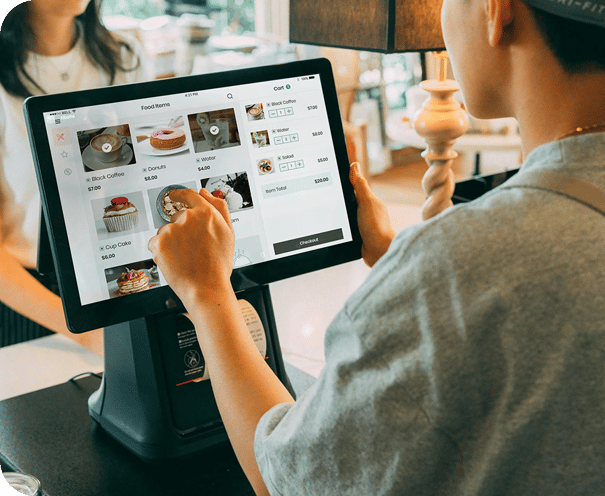
How you run your store day to day should determine which grocery POS system is best for your store.
The right system depends on whether your business operates primarily as a grocery store with prepared foods or as a restaurant with retail items. Understanding this distinction helps you invest in the platform that matches how you actually run your store.
.webp?width=593&height=705&name=image%20(9).webp)
Built by grocers, for grocers, our point of sale solution is designed with you in mind. Book your time with our team today!