



Grocery Store Holiday Preparation: A Plan for Independent Owners
Supermarket signage refers to all the signs in and around a grocery store — from overhead aisle markers and shelf talkers to entrance banners and promotional displays — that guide shoppers, surface deals, and communicate your store's identity.
Done well, supermarket signage increases basket size, reduces staff interruptions, and turns first-time visitors into regulars. Done poorly, it costs you sales every day.
In this blog, we share best practices for supermarket signage, a complete checklist of the signs every grocer needs, and six ways great signage improves the shopping experience — with specific tips for international grocers and natural food retailers.
Let’s dive in.
The Basics of Supermarket Signage
Every sign in your supermarket is doing a job — whether it’s helping shoppers find pasta sauce faster or drawing attention to a weekly special.
The key is knowing which signs matter most and where they’ll have the biggest impact:
- Aisle signs help customers find specific items on their shopping lists.
- Promotional signs let people know about limited-time offers, customer loyalty programs, and promotions.
- Wayfinding signs help customers navigate the various sections of the store (checkout, pharmacy, deli counter, etc.).
- Informational signs add context, storytelling, and trust — for example, a sign highlighting the local farm you source your tomatoes from.
Together, these four sign types form the foundation of a store experience that feels engaging and easy to shop.
Here Are the Signs Every Grocery Store Needs
When placing your signage order, it helps to think through every zone of your store.
Here's a breakdown of common sign types most grocery operations need.
Exterior and Entrance

Your exterior signs are the first impression, here’s how you can make them count:
- Storefront banner: Announce hours, grand openings, and seasonal promotions.
- Window clings: Promote weekly specials, loyalty program enrollment, and featured products.
- Sidewalk A-frame signs: Highlight flash sales, daily deals, or "now open" messaging.
- Entrance door decals: Display payment types accepted, accessibility info, and health notices.
Interior Wayfinding
.webp?width=1200&height=630&name=Supermarket%20Signage%20101%20(1).webp)
Once shoppers are inside, these signs keep them moving in the right direction:
- Overhead aisle signs: Identify departments and categories — produce, dairy, frozen foods, and so on.
- Aisle endcap headers: Feature product categories or promotions for that aisle.
- Department banners: Label specific areas — bakery, deli, butcher, seafood, floral, pharmacy.
- Directional floor decals: Guide traffic flow, especially useful in high-volume stores.
Product and Pricing
.png?width=1200&height=630&name=Supermarket%20Signage%20101%20(2).png)
At the shelf level, these signs do the selling so your staff doesn't have to:
- Shelf talkers: Spotlight individual products — great for new arrivals or featured items.
- Price tags and unit-price labels: Meet compliance requirements and build customer trust.
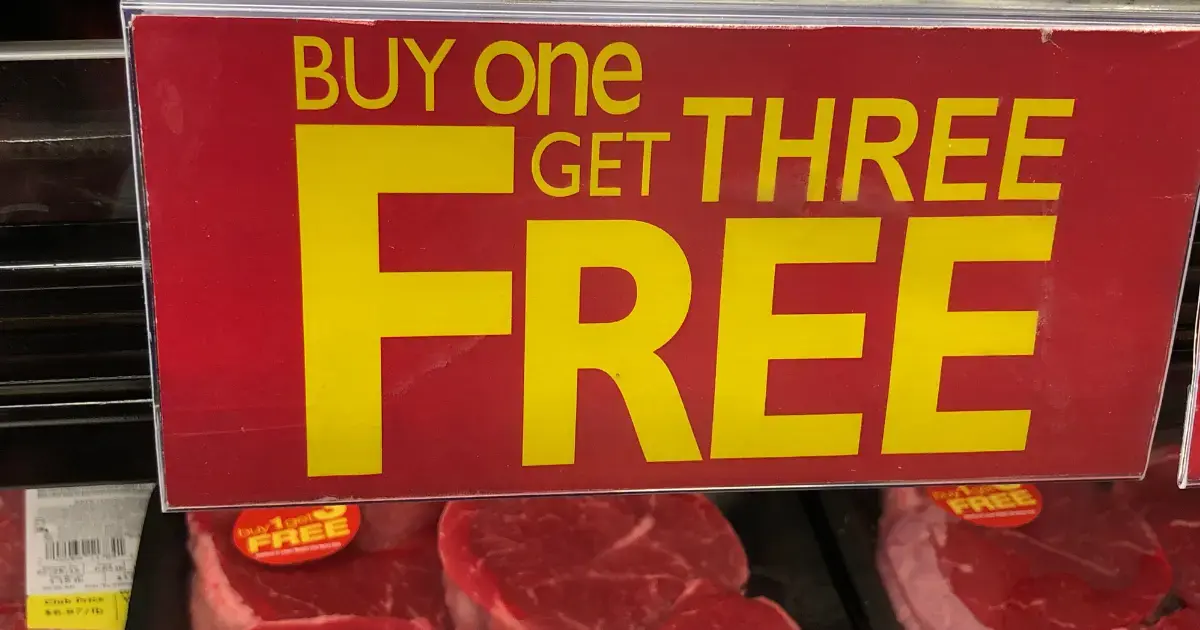
- Sale/promo tags: Distinguish discount types with color-coding — weekly ad, manager's special, or clearance.
- "New item" flags: Draw attention to recent additions to your inventory.
- Out-of-stock placards: Manage expectations and invite customers to ask staff for help.
Specialty Department Signs
.png?width=1200&height=630&name=Supermarket%20Signage%20101%20(3).png)
Your specialty departments are a differentiator — here's how to make sure your signage reflects that:
- Deli counter menu boards: Showcase rotating specials, meat and cheese selections, and prepared foods.
- Butcher case signage: Communicate cut names, sourcing details, and suggested cooking methods.
- Seafood counter cards: Display species, origin, and sustainability certifications.
- Bakery display signs: Feature daily baked goods, custom order info, and allergen notices.
- Hot bar/prepared foods labels: List dish name, ingredients, and price per pound.
- Bulk bin labels: Include product name, PLU code, and price per pound/ounce.
Promotional Displays
.webp?width=1200&height=630&name=Supermarket%20Signage%20101%20(4).webp)
These are the signs that drive unplanned purchases. Here's what to put in place:
- Endcap display signs: Feature products with bold promotional callouts.
- Cross-sell merchandising cards: Suggest pairings or recipe bundles — "Pairs well with…" or "Complete your taco night.”
- Checkout lane impulse signs: Prompt last-minute grabs — candy, batteries, gum, gift cards, and other grab-and-go items.
- Floor display headers: Promote pallet or floor-stacked products with freestanding signs.
Related Read: 6 Creative Grocery Store Displays To Drive More Sales
Compliance and Informational
.webp?width=1200&height=630&name=Supermarket%20Signage%20101%20(5).webp)
Compliance signage isn’t optional. Here's what every store needs to stay covered:
- EBT/SNAP accepted signage: Place at exterior and checkout.
- Alcohol and tobacco age-verification signs: Post at relevant displays and checkout as required.
- Allergen and dietary information signs: Display prominently in deli, bakery, and prepared foods areas.
- Return policy and customer service signs: Set expectations clearly at checkout and service desks.
- Restroom and facility wayfinding: Direct customers to facilities throughout the store.
International and Specialty Store Signs
.webp?width=1200&height=630&name=Supermarket%20Signage%20101%20(6).webp)
If your store serves a specific community or niche, here's how signage helps you show it:
- Bilingual or multilingual aisle signs: Serve non-English-speaking communities — essential for Hispanic, Asian, Caribbean, African, and other international markets.
- Cultural holiday/seasonal promotion banners: Celebrate occasions like Lunar New Year, Eid, Diwali, Caribbean Carnival, and Día de los Muertos.
- Country-of-origin signs: Highlight imported produce, specialty ingredients, and cultural staples.
- Halal and kosher certification displays: Place prominently at relevant sections and the entrance.
- Natural/organic certification signs: Feature USDA Organic, Non-GMO Project, fair trade, and similar labels.
- "Local" and farm sourcing callouts: Strengthen community ties — particularly effective for co-ops and independent natural grocers.
- Supplement and wellness product shelf talkers: Support customer education on unfamiliar products, common in natural food stores.
Supermarket Signage Best Practices
Before getting into how supermarket signage impacts your customers, let's cover what makes great supermarket signage:
- Clear: Most of a customer's time in your store is spent simply trying to locate items. Studies show that about 80% of in-store time goes toward navigation, with only 20% dedicated to actual purchase decisions. That means clear, readable signage influences customers at virtually every step. Use minimalistic designs and easy-to-read typefaces.
- Simple: Popping into a new supermarket can be stressful, especially if you don't know where to look. To avoid confusion, ensure your signs are clear and not overloaded with information.
- Local: Customers often prefer smaller supermarkets because they feel connected to local businesses. Use signage to highlight products from other businesses in your area whenever you can.
- Vibrant colors: Supermarkets and grocery stores tend to favor a warmer color palette to create a sense of freshness and quality. Color-coding your promotions — for example, always using orange for flash sales — helps customers quickly spot deals.
- Big: Customers shouldn't need to squint their eyes to read your signs. Large designs are high-impact and more readable. Reserve oversized formats for section names like butcher counter or bakery.
If it fits your brand, handmade signage is also increasingly popular with customers.

How Great Supermarket Signage Improves the Shopping Experience
Great signage helps people find their way around your store, but it also tells a story. Good (and bad) signage sets the tone for the entire shopping experience.
Here's how getting it right pays off.
1. Creates a Memorable Experience
Attractive signage elevates your store from an anonymous collection of products and aisles to a place with an identity — one that customers remember and return to.
Here’s how you can do that:
- Reinforce what makes you different. If you're a natural food retailer or co-op, lean into local sourcing, organic certifications, and sustainability commitments. A hand-lettered chalkboard sign noting your eggs come from a farm 20 miles away builds a connection no national chain can replicate.
- Celebrate the cultures you serve. If you're an international or specialty grocer, bilingual signs, culturally resonant imagery, and seasonal banners tied to cultural holidays signal to your community that you understand and welcome them.
2. Drives Impulse Purchases and Cross-Sells
Grocery stores have a natural advantage when it comes to impulse buying — customers are already browsing, often with a basket in hand. Smart signage turns that behavior into additional revenue.
For example:
- Target the checkout lane. Place signs for single-serve snacks, reusable bags, or loyalty program sign-ups where customers have nothing to do but wait — the message lands at exactly the right moment.
- Post cross-sell signs in the aisles. Drive basket additions without any staff involvement — "Don't forget the parmesan — Aisle 4" near the pasta sauce, or a recipe card next to the ground beef listing everything needed for a weeknight meal.
- Lean into cultural pairings. If you're an international grocer, tie cross-sell signs to cultural recipes — pairing a key staple with the complementary products your community uses together to lift average transaction value while reinforcing your expertise.
- Educate with shelf talkers. If you're a natural food or supplement retailer, explain the benefits of unfamiliar products — adaptogens, fermented foods, specialty supplements — to reduce hesitation and increase trial purchases.
Related Read: Grocery Store Impulse Buying: Must-Know Stats & Strategies
3. Reduces Confusion and Speeds Up Shopping
Customers who can't find what they're looking for either ask the staff or give up and leave. Good signage solves this before it starts.
These moves make the biggest difference:
- Install a store directory near the entrance. This helps shoppers orient themselves immediately.
- Go beyond category names on aisle signs. Use your point of sale (POS) sales data to call out top-selling items so customers spot their favorites at a glance.
- Use both common and cultural names on signs. If you're an international grocer, add recognizable imagery too, so new shoppers outside your core community can explore confidently.
4. Encourages Upselling and Promotes Seasonal Deals
Signage is one of the most cost-effective tools for surfacing deals customers wouldn't otherwise notice.
Here’s how to make a system that does the work consistently:
- Establish a color-coding system for pricing. Once shoppers learn your colors for weekly ads, manager's specials, and clearance, they'll seek out deals on their own.
- Build seasonal displays with matching signage. Labels like "Summer Grilling Essentials" or "Holiday Baking Aisle" help customers find what they need while spotlighting items they weren't looking for.
- Tie promotions to your values. If you're a natural food retailer, campaigns like "Non-GMO month" or "Local farm feature" resonate more deeply than straight discounts.
5. Supports Meal Planners
Almost 44% of Americans say they meal prep regularly, meaning fewer customers are browsing without a list. Recipe-based signage meets them where they are, and still adds items to the cart.
Here's how to make it work:
- Set up recipe kit endcaps. A "Taco Tuesday kit" sign near the tortillas, or a "Sheet pan dinner" display near the proteins, helps planners grab everything without backtracking.
- Map bundle promotions to your displays. Set up the corresponding bundle discounts in your POS so that when customers bring those items to checkout, the price they see on the sign matches what they're charged.
6. Enables Quick Adjustments
Sometimes you need to move fast — a price change, an overstock flash sale, a product approaching its sell-by date. Digital signage makes that possible without the print-and-hang cycle.
Digital signage lets you:
- Update prices instantly. This means displayed amounts are always accurate, reducing friction at checkout.
- Free up staff time. Eliminating manual tag replacements means you can spend more time on the floor with customers.
Frequently Asked Questions
What types of signs does a grocery store need?
A grocery store needs four main categories of signage: wayfinding signs (to help customers navigate departments and find specific items), promotional signs (to highlight deals, loyalty programs, and seasonal offers), product and pricing signs (shelf talkers, price tags, unit-price labels, and sale tags), and compliance signs (EBT/SNAP acceptance, allergen notices, age-verification notices). Specialty departments like the deli, butcher, and bakery also benefit from their own dedicated menu boards and sourcing callout signs.
What is digital signage in supermarkets?
Digital signage in supermarkets refers to electronic displays — screens, video walls, or digital price tags — that replace or supplement traditional printed signs. The main advantage over print is flexibility: prices and promotions can be updated instantly from a central system, meaning displayed information always matches what customers are charged at checkout. Digital signage also supports dynamic content like video product demonstrations, rotating promotions by time of day, and real-time inventory-driven messaging.
Maximize Your Supermarket Signage With IT Retail
Great products and friendly staff get you halfway there. The right signage closes the gap.
When every zone of your store is clearly marked, promotions are impossible to miss, and shoppers can navigate without asking for help, the whole experience gets better — and so does your bottom line.
IT Retail gives you the tools to make your signage work even harder:
- Custom reports: Identify your bestsellers, seasonal trends, and daily movers — then build signs around what customers already love.
- Online sales: Bridge your in-store and online presence with e-commerce tools. Use QR codes to link shelf labels directly to product pages for deeper engagement.
- Tailored loyalty programs: Build any loyalty structure you want and give it prime real estate on your in-store signage.
Your store already has a story to tell. Make sure your signs are telling it.
Schedule a free demo today to see how IT Retail helps you get more out of every sign in your store.


Luke has been in the grocery industry for 15 years. Starting out as a POS technician, he worked his way up to VP. Luke has seen, adopted, and even contributed to significant technological advancements, such as moving from server-based systems to cloud solutions with Markt POS and the AI revolution transforming store operations. Luke is our resident expert for all things grocery store and point of sale technology. “Store owners spend too much time on paperwork instead of building their business. After helping my best friend's father run his grocery store, I made it my mission to give hardworking store owners better tools to succeed.”