





Cost of living is up. Personal budgets are tight. It’s no surprise that value-driven customers are buying more private-label and store brands than ever.
Private-label products can be great for both customers and grocery stores. Store owners enjoy higher profit margins and can potentially phase out low-margin competitors. Meanwhile, customers have a reliable, low-cost option with your name on it.
It sounds like a no-brainer — but private-label brands aren’t a perfect fit for every type of grocery store. They can be expensive to get off the ground and hard to promote.
Corporate grocery stores have offered their own private-label products for years — but how hard is it to start a grocery store private-label brand as a small business?
In this article, we’ll explore how private labels work for small grocery stores, the pros and cons of offering them at your store, and practical advice for successfully rolling out a private label.
How Does a Private Label Work?
Let’s start with the basics: A private-label product is an item, usually created by a third party, that’s labeled and sold as the store’s own.
We’ve all seen private labels at big-chain grocery stores, like Kirkland Signature at Costco, 365 at Whole Foods, or Private Selection at Kroger. These corporate brands typically negotiate directly with large food manufacturers, repackaging items right off an existing assembly line.
Unfortunately, that option is out of reach for most independent grocery stores. Generally speaking, small business grocery stores use two sources for private-label products:
- Large wholesalers sometimes set aside a number of generic items to use as private-label products. Businesses can reserve these items to package themselves.
- Local food manufacturers or businesses can partner with a grocery store to create a private-label version of their product or a store-specific variant.
Private labeling allows grocery stores to sell high-quality products at more competitive prices because they don’t pay for a brand markup and generally order them in bulk.
Grocery Private-Label Brands: Pros & Cons
Sure, customers are scrambling to save money with private-label products, but that doesn’t necessarily mean it’s a good fit for your business.
Here are some pros and cons to consider.
Long story short: A private label is ideal for established local stores as a long-term profit strategy, not a short-term fix for lower profit margins.
6 Steps for Starting Your Own Grocery Store Private-Label Brand
If the ideas of large minimum orders and marketing new products don’t intimidate you, you might be ready to pursue creating a new grocery store private-label brand.
Here are six steps to follow when starting your own.
1. Identify Your Key Value Items & Leading Categories
The biggest mistake a grocery store owner can make when spinning up a new private-label brand is to create private-label versions of everything. Yes, that’s what big grocery stores do — but it’s a recipe for disaster for a local grocery store.
Instead, your private-label brand should be centered around your most popular products and key value items (KVIs). But before you can identify your top performers, you need a point of sale (POS) that actually shows you the data — not just collects it.
In other words, if you can’t answer the question, “what are my actual top movers?” with confidence, you may not be ready quite yet.
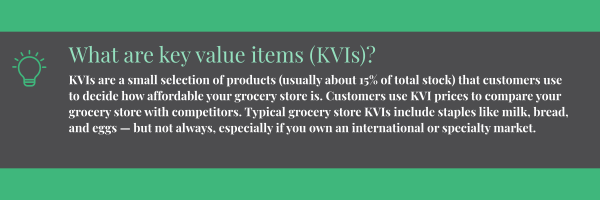
Use the reports on your POS system to find consistently high-volume items or departments that perform well throughout the year. These are the areas to focus on when deciding which types of private-label items to sell.
Be careful: A popular item might be popular for a reason. See if high sales of an item extend outside of one or two particular brands. If they don’t, you might be setting up your private-label to fail as it struggles to compete with brands customers already trust.

2. Talk With Suppliers & Manufacturers
Because a local grocery store won’t have the same leverage as a massive chain, make sure your private-label ambitions match the reality of what’s available.
Start by talking to any of your large wholesalers to see:
- If they have any products set aside for private labeling
- What those products are
- What the MOQ is
Get a sample of any products before striking a deal. Most customers perceive a private-label product as your product. Don’t sell something that isn’t up to your standard.
Another avenue to take is talking with local food companies directly. If you have a good relationship with a food manufacturer that already sells well in your store, it might be mutually beneficial to enter a partnership.
Working with manufacturers creates opportunities to come up with exclusive flavors or products in exchange for consistent purchase orders. Another advantage of working locally? You can rest easy knowing your private-label brand is high-quality.
3. Consider Pooling Resources With Other Local Businesses
The biggest hurdle for a small, single-location grocery store is the large minimum order required for private-label products. To make private labels worth it, many wholesalers and manufacturers require you to order in much larger quantities than you typically would.
One way around this is to pool your resources with other local businesses. By going in together on a large order, you can all enjoy the cost benefits without overcommitting.Of course, there are drawbacks to this approach. If the wholesaler handles labeling, they probably won’t be willing to create individual packaging for multiple stores — which means your private label wouldn’t be unique to your business alone.
If you and your fellow businesses handle the labeling of the products yourselves, then you’ll have extra labor and packaging costs to contend with. Make sure the higher profit margins are worth the added costs.
Related Read: 7 Tips for Managing Your Grocery Store Operating Costs
4. Design Eye-Catching (and Compliant) Packaging
One of the great things about a private-label brand is the freedom you have in deciding a look. Strike a balance between labels that are unique and eye-catching but also familiar. Look for inspiration from other popular brands (without copying them).
While we generally recommend using consistent colors and shapes for your store design, leave some room for variation among private-label products. For example, you might want to use different box colors for a snack mix than you do for a yogurt cup.
That said, try to find familiar elements that tie your grocery store's private-label products together — whether it’s your store’s logo or a similar art style. Your private label should feel cohesive across departments and product types.

See how these honeys have a striking logo for their private label right in the center of the packaging. (Image source: MB Design)
Last but not least, remember to follow food packaging rules. Save your creativity for the colors, brand name, and design — not ingredient lists or unproven health claims.
5. Set Up a Competitive Pricing Strategy
The ultimate goal of offering a private label is to reap the benefits of low costs and higher margins. None of that is possible if you don’t carefully consider your pricing strategy.
Log your private-label wholesale or manufacturing costs in your inventory management system. This makes it easier to calculate your desired markup and profit margins. At the same time, you also want to keep a close eye on the costs of similar products.
Price your private-label products based on a desired profit margin, while keeping your prices below competing brands. This means if a competing product’s wholesale cost changes because of tariffs or a seasonal shift, you probably want to adjust your private-label pricing in response.
Because you’ll likely have large amounts of private-label items on hand, they’re also a safe bet for use in buy one, get one (BOGO) offers and other promotional sales.
6. Choose Shelf Placement
Obviously, you want your private-label brand to be popular, but that doesn’t mean it should be the only thing people see. Remember: Private-label is an alternative to other brands, not a replacement.
Most people consider a private label as a value pick, so place it next to or just below similar name brands. Value and bulk items are usually placed at the lower levels of a shelf, so when in doubt, go low — but not so low that people might skip it entirely. Standing displays and endcaps are also a great way to put your private-label brand in front of more customers.
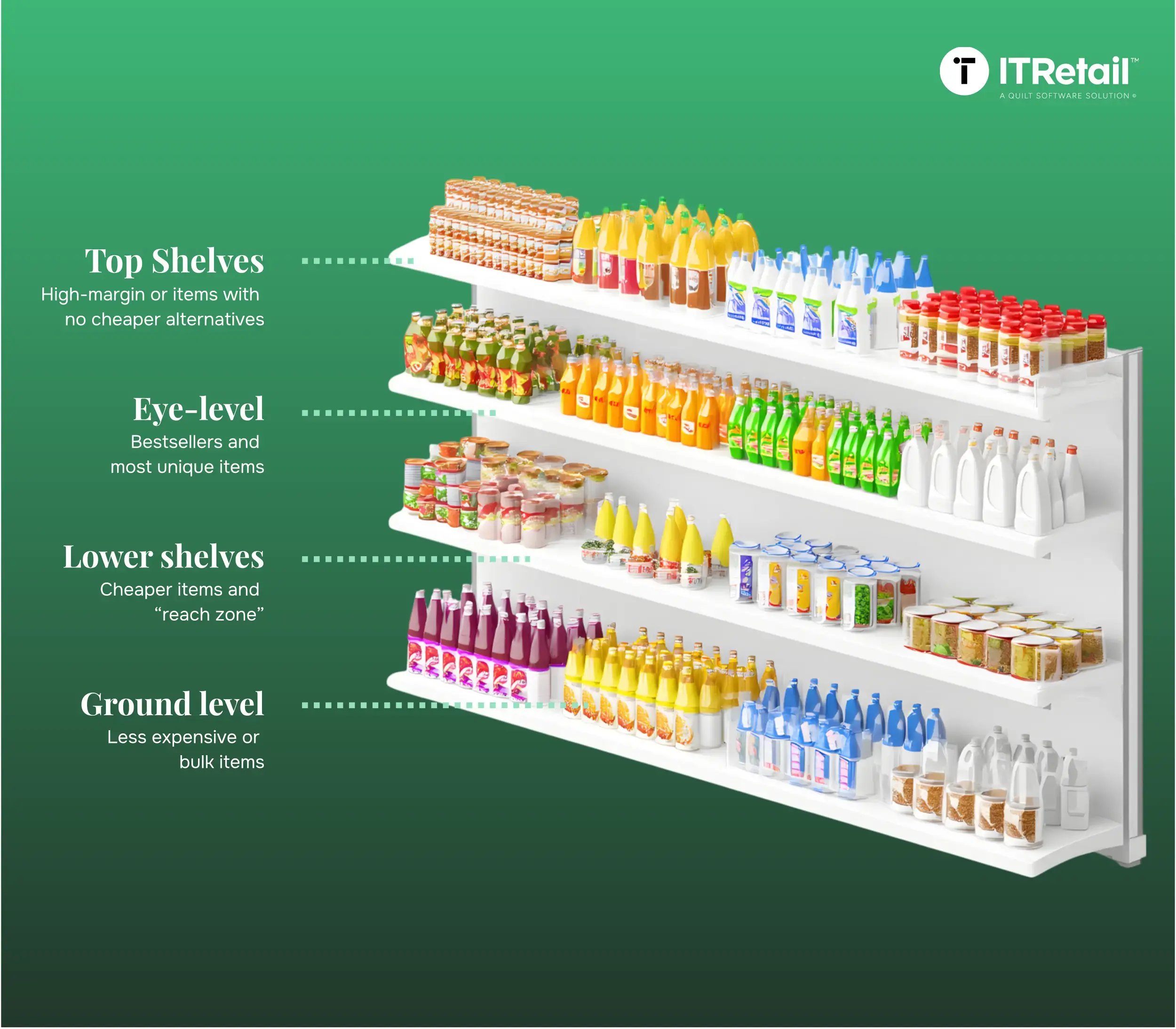
Periodically check in on the sales data of your private-label brands. If sales are booming, you might consider moving them up to the coveted eye-level spaces.
Related Read: Product Placement in Grocery Stores: 8 Sales-Boosting Strategies
Boost Profits With a Trusted Grocery Store POS
If you’re an established grocery store, a private-label brand might be just the thing to help you establish trust and encourage value-oriented customers to shop with you more.
A long-term grocery store private-label brand strategy starts with better visibility. IT Retail has spent over 30 years working with independent grocery stores to give them industry-specific inventory and reporting tools to make better product mix and pricing decisions.
Schedule a personalized demo today to see how IT Retail makes it easy to master your inventory and boost your profit margins.



![How Does the Supermarket Supply Chain Work? [+How Your Store Can Adapt]](https://www.itretail.com/hs-fs/hubfs/Blog%20Featured%20Images/IT%20Retail%20Blog/How%20Does%20the%20Supermarket%20Supply%20Chain%20Work%20-%20BLOG.webp?width=520&height=294&name=How%20Does%20the%20Supermarket%20Supply%20Chain%20Work%20-%20BLOG.webp)
 by Margaret Thacker