




What is a Grocery Store Business Plan?
A grocery store business plan is a formal document — typically 15–20 pages — that outlines your store's concept, target market, product mix, operational structure, marketing strategy, and financial projections.
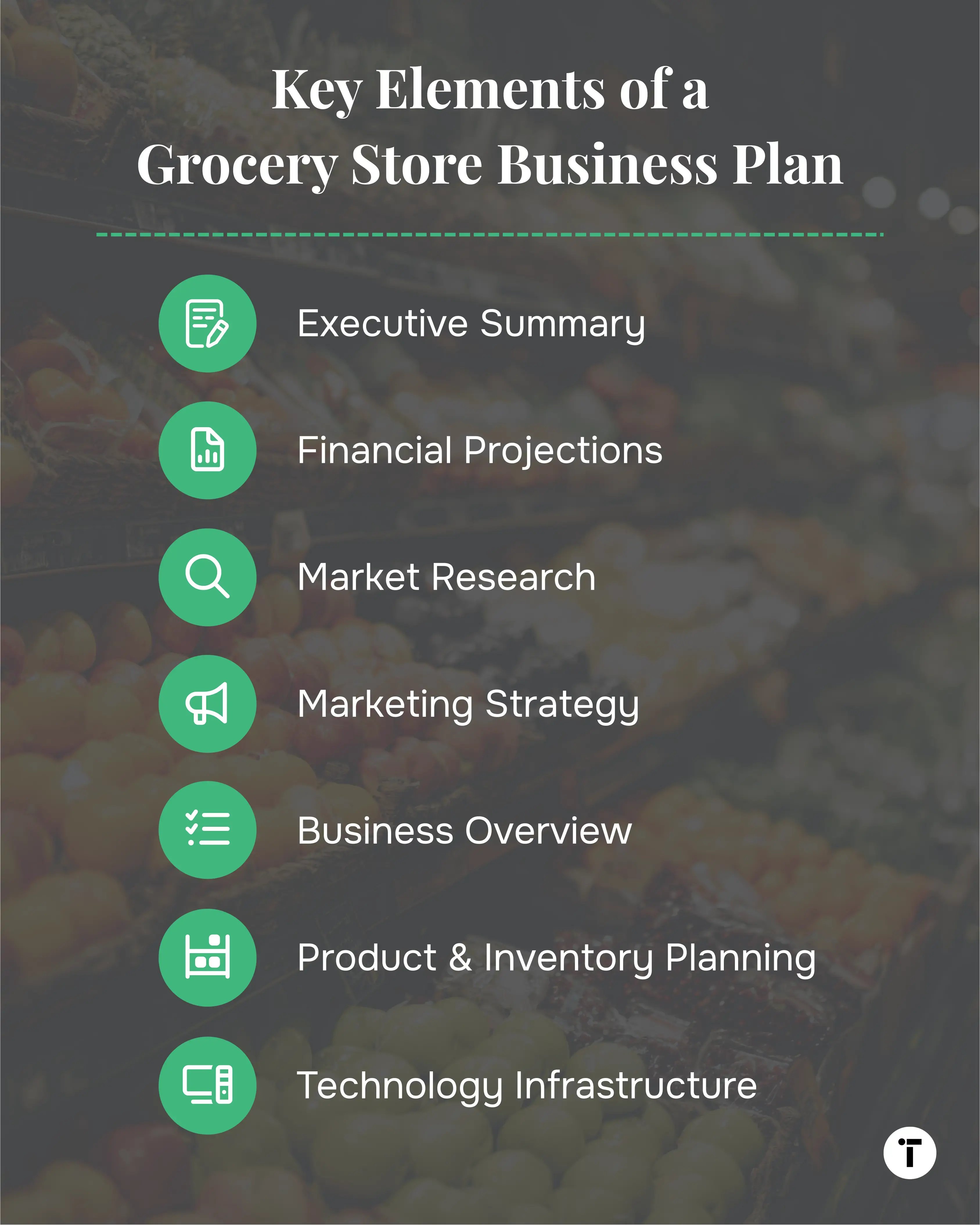
A complete plan typically includes these sections: executive summary, business description, market and competitive analysis, inventory and product plan, operations and staffing plan, marketing strategy, technology plan, and financial projections.
Together, these sections give investors, lenders, and partners a full picture of your store's potential — and give you a concrete roadmap to follow.
How Long Is a Grocery Store Business Plan?
The average business plan is about 15 to 20 pages. Writing it takes anywhere from a few weeks to a few months, depending on:
- Your business experience
- How niche or complex your business model is
- How big the business is and your financial needs
So, why is writing a business plan worth it?
Imagine your business is a house. You might know the basic shape and how many rooms you want off the top of your head — but without a blueprint, mistakes are inevitable.
A grocery store business plan is a blueprint for your future success, giving you a concrete plan of action and measurable goals.
What Should a Grocery Store Business Plan Include?
- Executive summary: A one-page overview of your concept, target market, and financial highlights — written last but read first by investors
- Business description: Your store concept, ownership structure, and mission
- Market analysis: Local demographics, nearby competitors, and the gap your store fills
- Product and inventory plan: Your product mix, suppliers, pricing strategy, and MOQ considerations
- Operations and staffing plan: Day-to-day processes, staffing structure, and key technology
- Marketing strategy: How you'll attract and retain customers, including your loyalty program and online presence
- Financial projections: Startup costs, monthly operating expenses, revenue forecasts, and break-even analysis
7 Tips for Developing a Winning Grocery Store Business Plan
We want to make sure you start the process of opening a grocery store on the right foot. So, we’ve compiled some expert tips to get you in the right headspace for writing a business plan that’ll set you up for success.
If you feel ready to dive straight into writing after reading our tips, we recommend checking out POS Nation’s grocery store business plan writing guide for a great step-by-step breakdown of the process.
Let’s dive in.
1. Have a Unique Vision for Your Grocery Store
The first step to creating your grocery store business plan is something you’ve probably already done — imagining what you want your grocery store to be like.
To make your business pitch compelling, get into your potential customers' headspace. Ask yourself questions like:
- What makes my grocery store different than the one down the street?
- What kind of feeling will customers get when they enter the store?
- What does my store offer the community?
- What can customers buy here that they can’t get anywhere else?
When you open a grocery store, you’re competing with name brands and other stores that have been around for years. Don’t just think about what makes you better than the competition, think about what makes you different.
The best way to develop your vision is to home in on any of your neighborhood’s unmet grocery needs.
For example, your area may have big-box stores offering general groceries, but there could be an opening in the market for a specialty grocery store offering unique or international goods that aren’t easily found elsewhere.
Here are a few specialty grocery store concepts to get the creative juices flowing:
- An organic grocery store offering health foods and certified organic groceries
- A grocery shop catering to specific dietary needs like vegan, vegetarian, or gluten-free
- A butcher shop offering fresh meats cut to order
- A deli offering meats and cheeses by the pound and charcuterie supplies
- A grocery store offering a mix of traditional groceries and quick-service meal options
2. Create a Focused and Comprehensive Inventory Plan
These days, shoppers are largely in two camps. They’re either discount shoppers looking for the cheapest deal online or at discount shops, or premium shoppers willing to spend extra cash on fresh, high-quality food.
Most specialty grocers try to compete on price when they should be competing on quality.
Before you get established, you want to decide on a product mix that reflects your niche and avoids SKU bloat.
In your grocery store business plan, you need to outline:
- The products you plan to carry
- Where you intend to source them, minimum order quantities, and wholesale costs
- Intended pricing (average markup by department and desired margins)
- Unique offerings (including imported or homemade products)
- Your inventory management processes and technology
This is also a prime opportunity to think through seasonal demand, including how you’ll forecast demand, what limited-time seasonal items you’ll stock, and holiday sales.
Your inventory will be both your primary way to differentiate yourself and your biggest operating expense. A comprehensive plan helps you avoid carrying unnecessary products and further define your unique value to the community.

3. Think About Staffing and Business Organization Early
A grocery store business plan isn’t just a place to dream about what food you’ll sell, but a chance to lay out in detail how the business side will operate before you put down money.
It’s not nearly as fun, but thinking through your staffing and operations shows potential investors that you can back up your passion for great food with business know-how.
Expect to lay out the following in detail:
Staffing and payroll are many stores’ second largest operating expense, so it’s best to think through it early on. Besides, a well-trained, friendly staff makes a major difference in encouraging repeat business at your store.
Related Read: Why You Should Prioritize POS System Training in Your Grocery Store
4. Choose the Right Grocery Store Technology
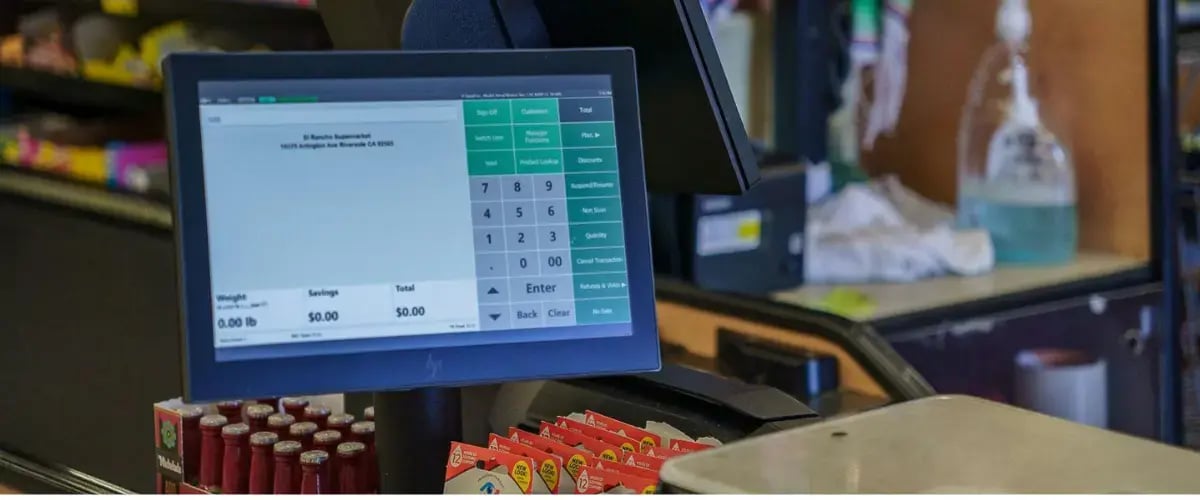
Your employees and managers won’t be the only things keeping your grocery store business running — the right technology has a huge impact on all aspects of your store, from what payments you can accept to how precisely you can track inventory.
We’ve seen owners of brand-new stores and people inheriting an existing store leave this step to the last minute. We don’t recommend it.
Being saddled with generic point of sale (POS) software can make running your store much more difficult than it needs to be. Choosing a grocery-specific POS system helps you:
- Track inventory (including perishable inventory, weight-based inventory, and custom inventory like prepared foods).
- Scan paper and PDF invoices directly into your system to streamline working with small, local vendors.
- Manage employee payroll and access to key systems.
- Track key performance indicators (KPIs) like profit margin by department, spoilage sources, inventory turnover ratio, and vendor performance.
- Sell items by the pound by integrating with scales and label printers.
- Speed up checkout with built-in support for EBT payments, customer loyalty management, and buttons for fast item lookup.
Thinking about the technology behind your store in advance helps you budget for it and find the must-have features you need from day one.

5. Find the Right Location and Equipment
Location is vital for any retailer — but maybe even more so for a specialty grocer.
When thinking about your location, keep the following in mind:
- Foot traffic and parking availability
- Nearby neighborhoods and customer demographics
- Nearby businesses (both complementary stores and competitors)
- Rent and utility prices in the area
- Zoning rules and regulations (especially if you sell hot and prepared foods)
It’s important to note that all locations will have upsides and downsides. For example, a location downtown sees a lot of daily foot traffic, but the people walking by might not necessarily be buying groceries.
Once you settle on an ideal location, it’s time to think about the store layout and physical equipment you need. Here’s a list of the basic equipment you need to get your grocery store off the ground:
- Shelving to display products along the aisles
- Standing displays for sale and seasonal items
- Produce bins and misters
- Refrigeration units and freezers
- Shopping carts or baskets
- Cart corals for the front of the store and parking lot
- Signage to help customers navigate your store
- Scales for products sold by weight
Knowing which types of products you plan to specialize in also tells you which equipment you need.
6. Come Up With a Marketing Strategy
After you’ve ironed out the details of running your grocery store, it’s time to think of how to get customers to visit.
Marketing is all about how you get new customers to try out your store and how to keep them coming back for more. Your grocery store marketing strategy isn’t just about your opening months, but what you do to grow your customer base in the months and years after.
Think through the various tactics you’ll use to market your store, including:
- In-store signage for sales and brand awareness
- Customer loyalty programs
- Your website and social media profiles
- Sales and promotional strategies
- Cultural events, holiday sales, and other special events
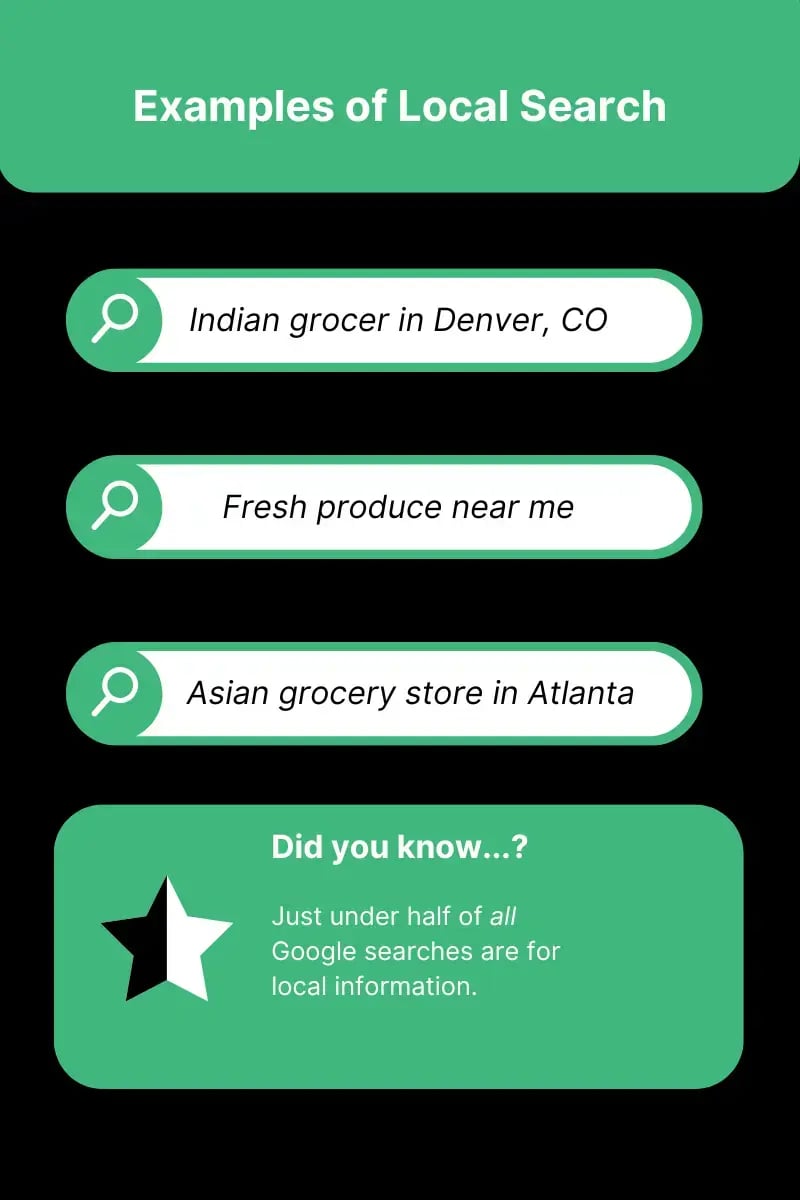
Theoretically, you could spend nothing on marketing — but with so much competition out there, that would be a mistake. At a minimum, you should focus on your online presence and search engine optimization (SEO).
7. What Are the Startup Costs for a Grocery Store?
At last, we reach (most) people’s least favorite part of a grocery store business plan: crunching the numbers.
Once you’ve determined where your store will be located, what types of equipment you need, what kinds of products you plan to offer, and other costs like employee pay and utilities, it’s time to do the math to determine how profitable your grocery store will be.
Here are the key startup costs to know (along with some estimates):
- Registration & licenses ($300–$5,000)
- Location ($165,000–$300,000)
- Technology ($1,000–$8,000)
- Initial inventory ($50,000–$300,000)
- Marketing ($0–$10,000)
- Renovations & store setup ($40,000–$85,000)
- Staff & training ($40,000–$70,000)
- Business insurance ($500–$2,000)
Your specific startup costs will vary greatly based on your location, the size of the store, and other factors — but expect to budget between $80,000 to $300,000 for a small to mid-size store.
When You’re Ready To Open Your Grocery Store, Get in Touch
Independent grocery stores are fundamental pieces of strong local communities — so follow your dreams, but back them up with a solid business plan.
In such a competitive environment, small businesses must take every advantage they can get. That’s why we work exclusively with small grocery stores, international markets, butcher shops, and food markets to give them the exact tools they need to find long-term success.
When you’re ready to open up your grocery store, find the perfect POS system for your needs by checking out our flexible pricing tiers.

.jpg?width=520&height=294&name=brooke-lark-HjWzkqW1dgI-unsplash-e1602201313600%20(1).jpg)
 by Margaret Thacker
![How To Write a Grocery Store Profit and Loss Statement [+ Free Downloadable Template]](https://www.itretail.com/hs-fs/hubfs/_Blog/Blog%20Featured%20Images/IT%20Retail%20Blog/How%20To%20Write%20a%20Grocery%20Store%20Profit%20and%20Loss%20Statement%20SOCIAL.png?width=520&height=294&name=How%20To%20Write%20a%20Grocery%20Store%20Profit%20and%20Loss%20Statement%20SOCIAL.png)